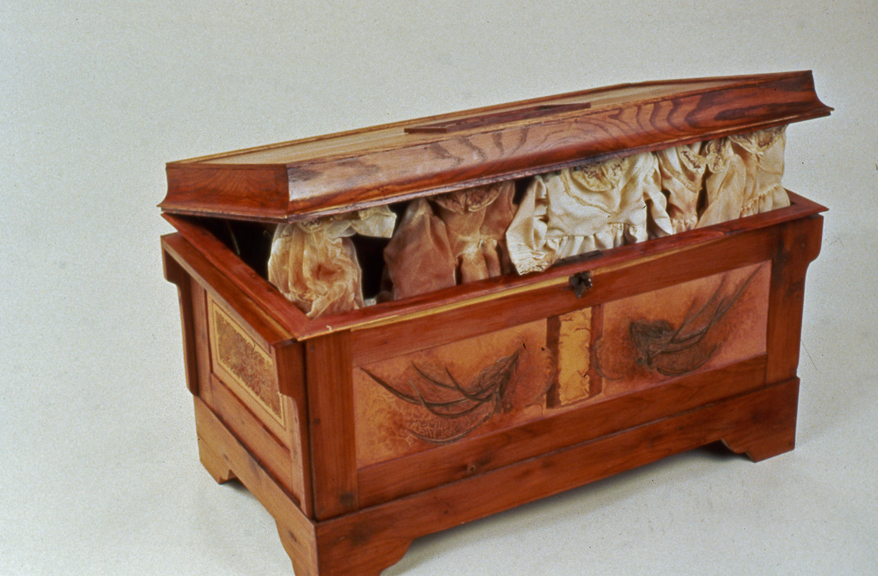
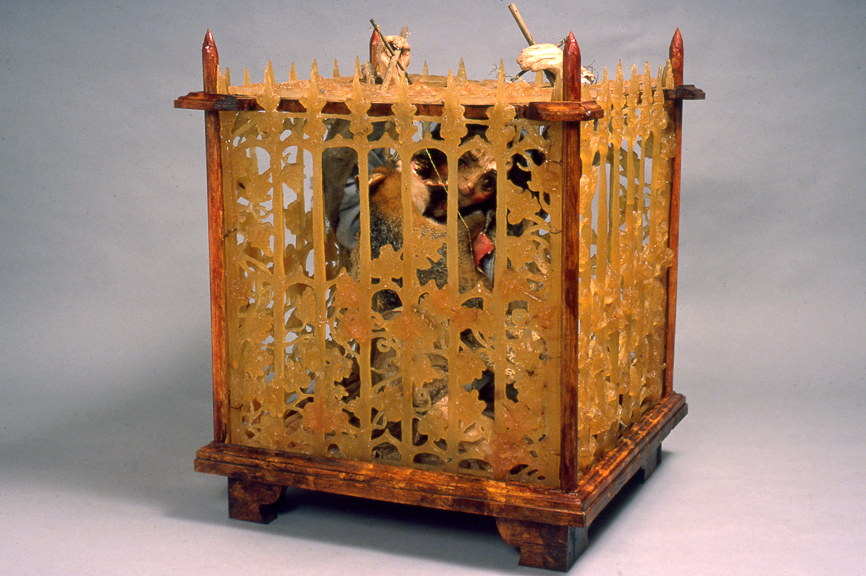
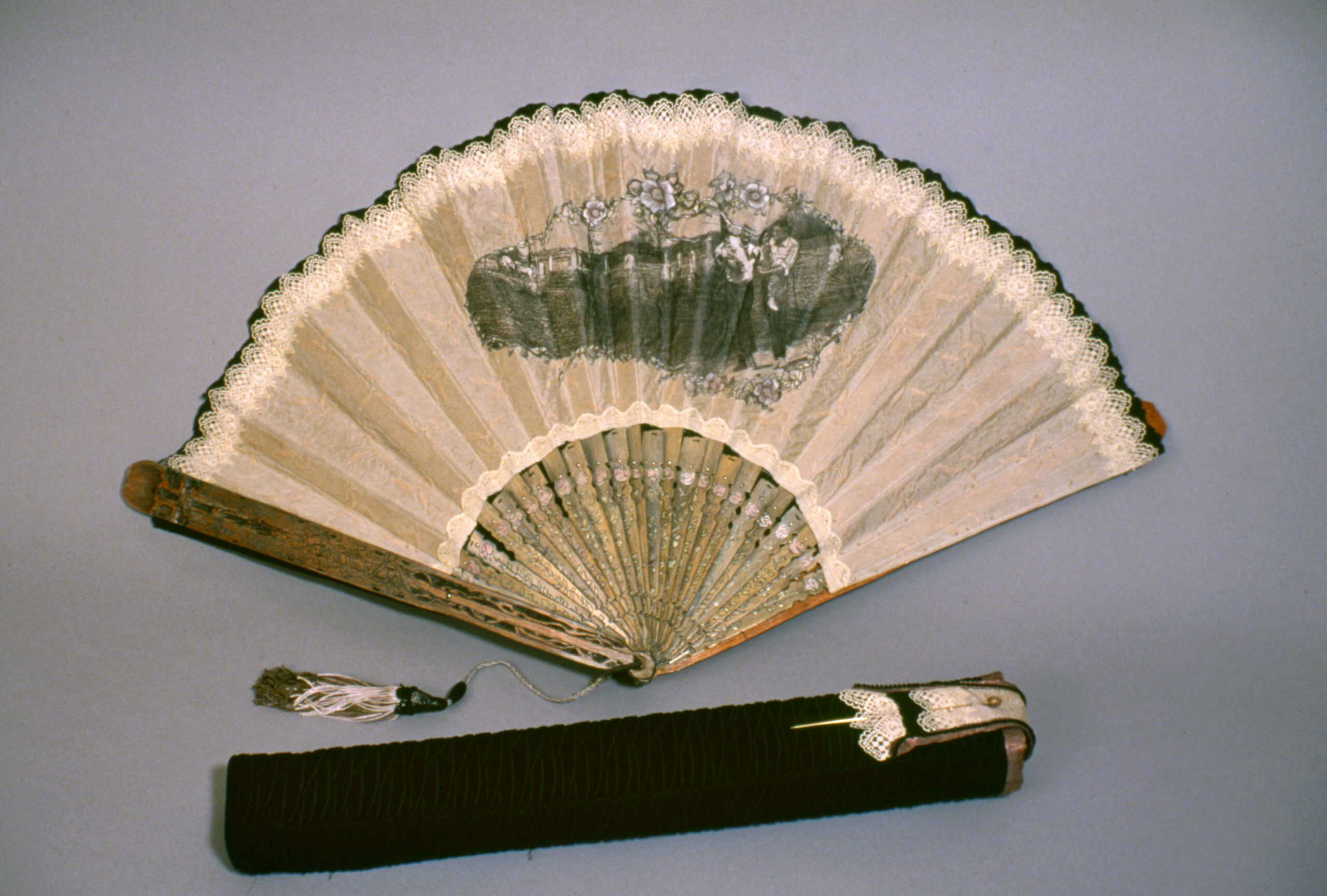
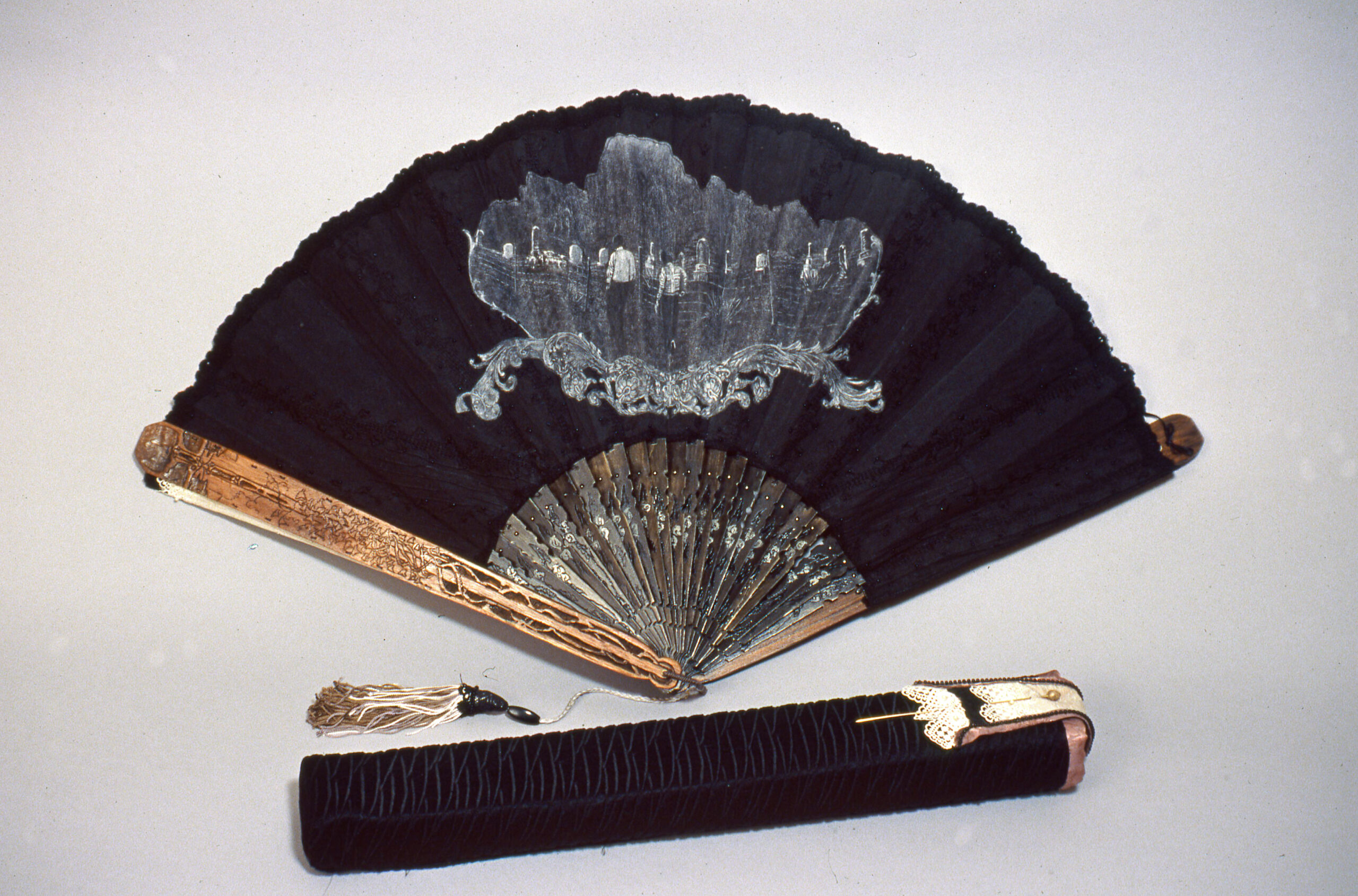
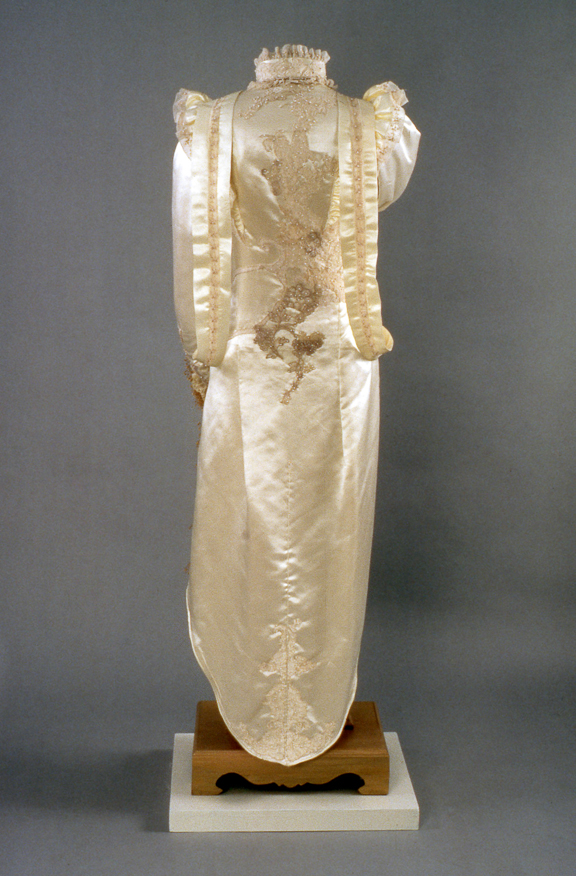
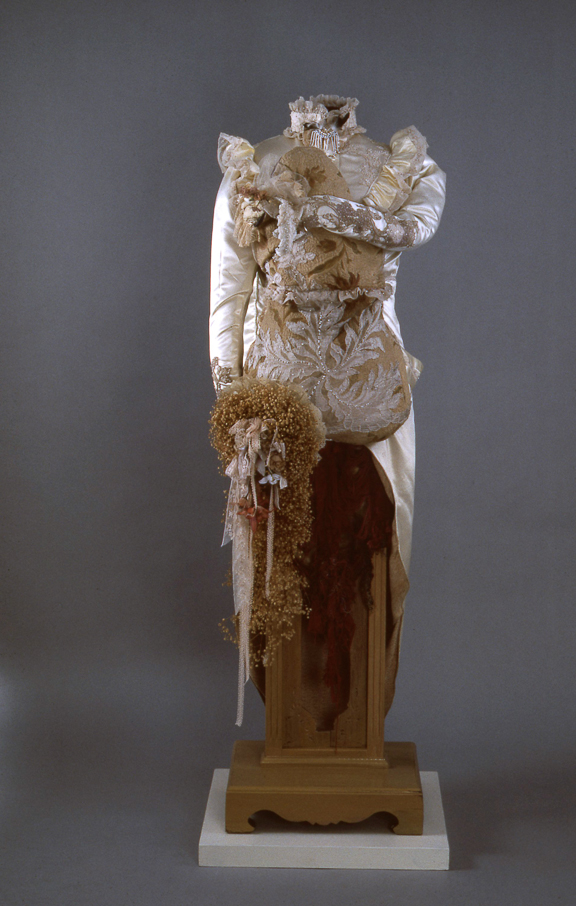
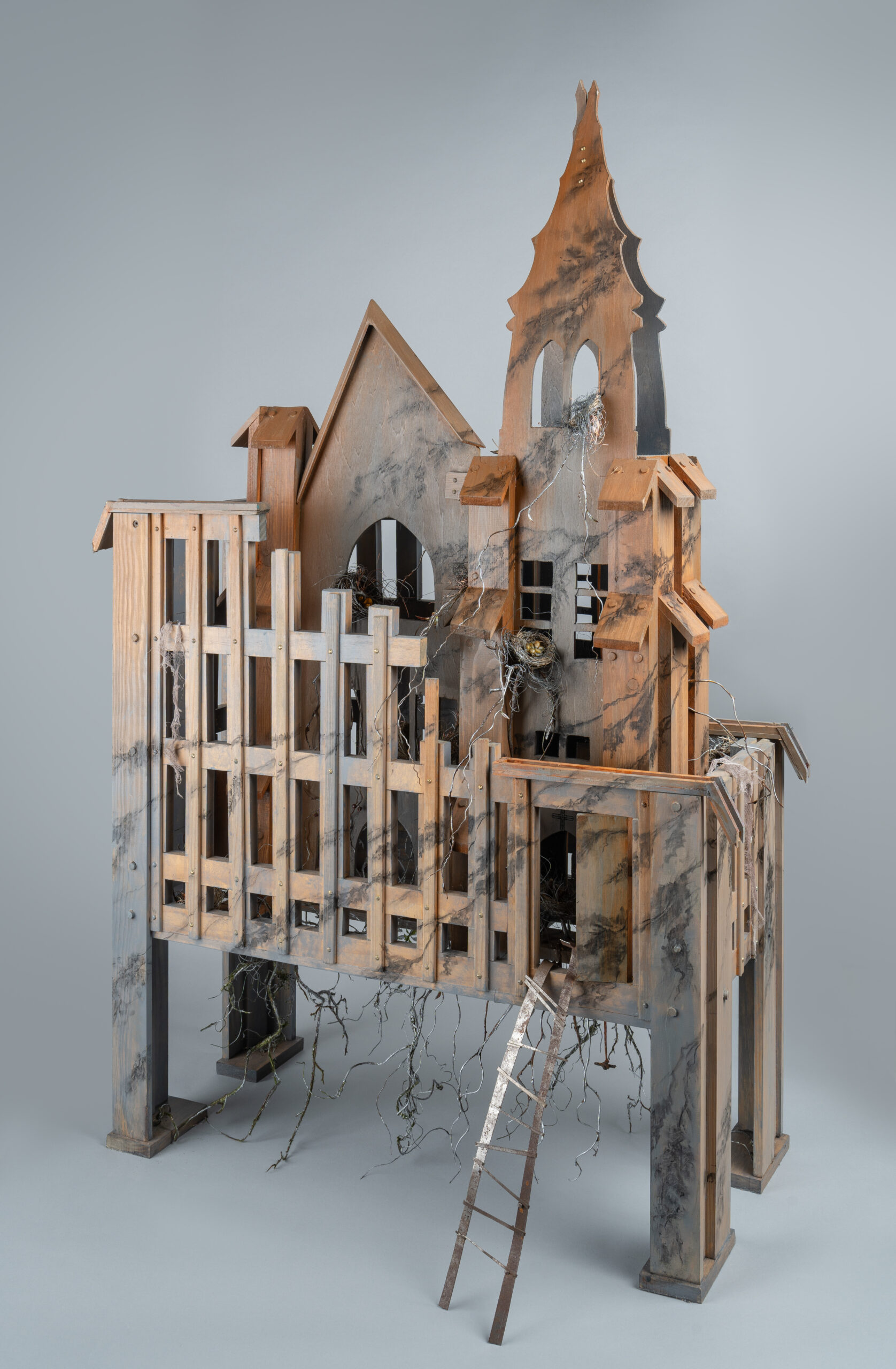
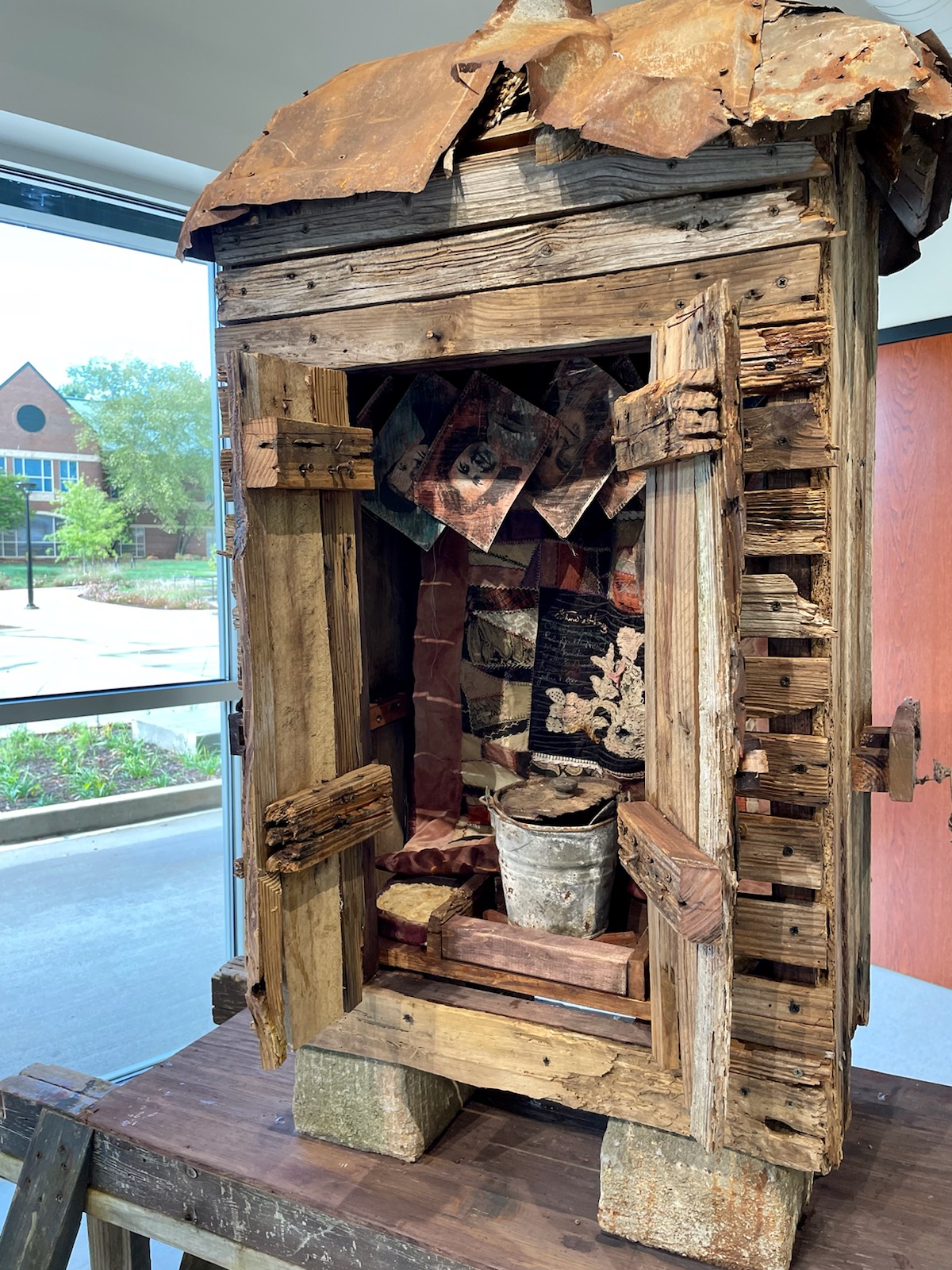
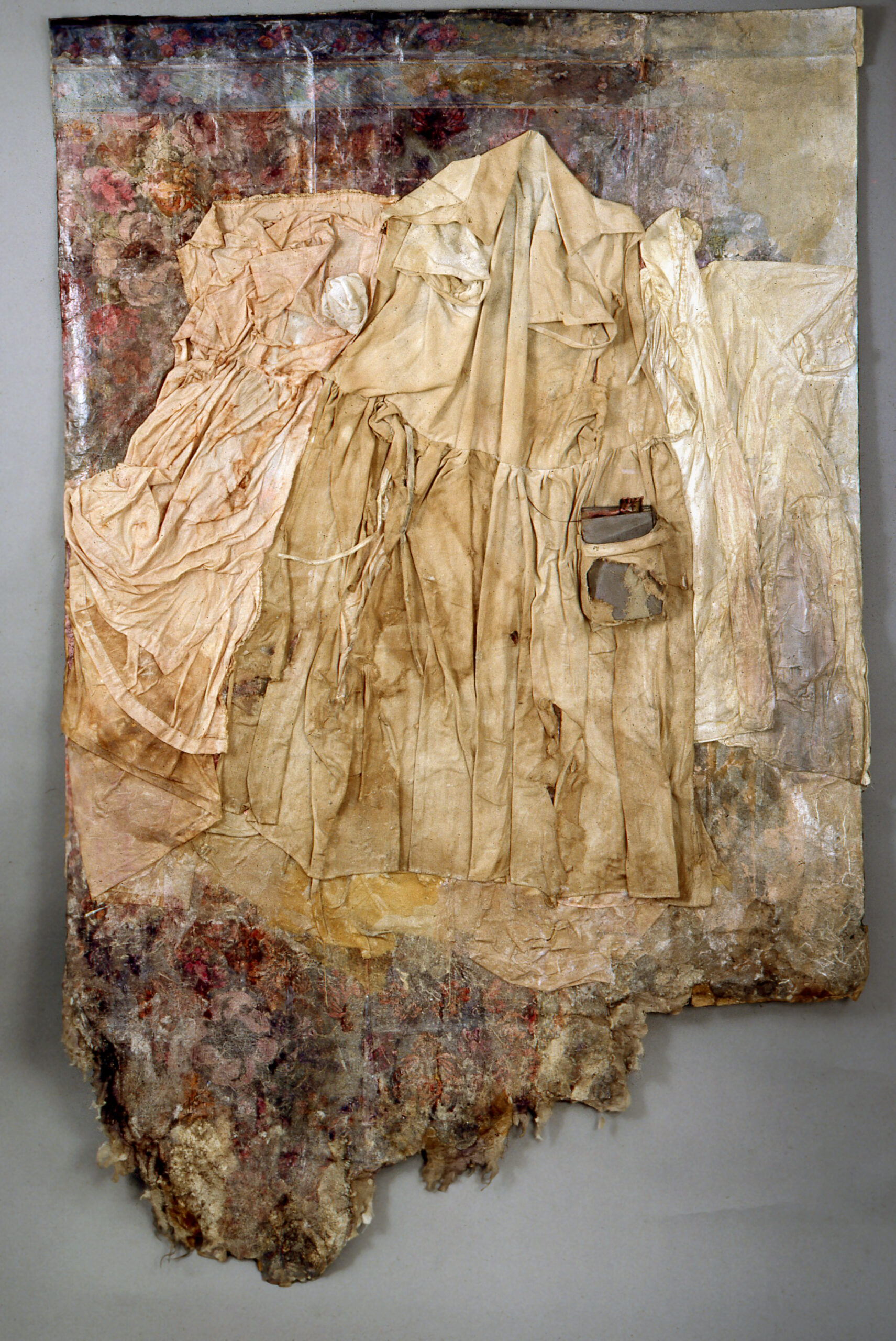
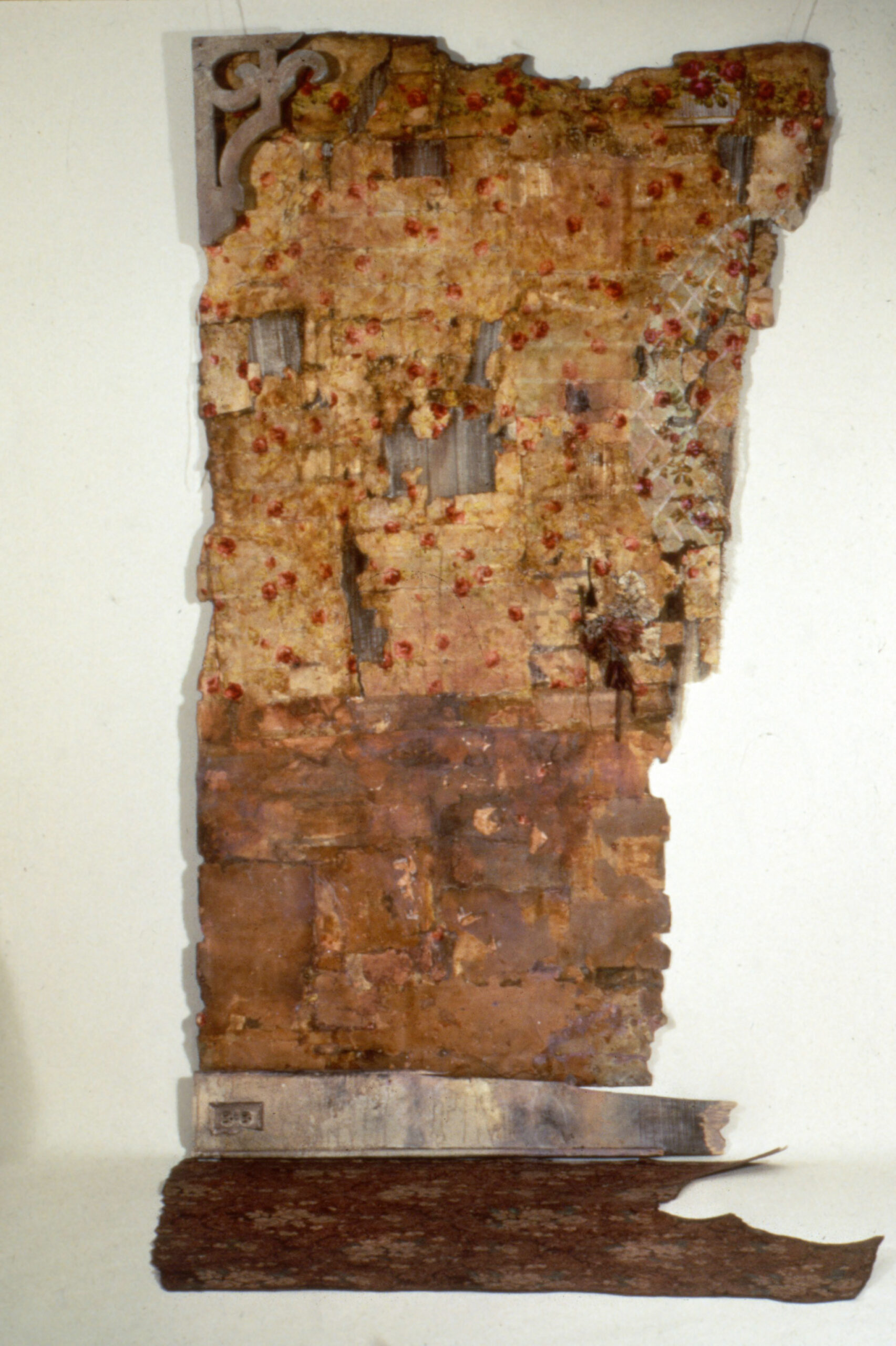
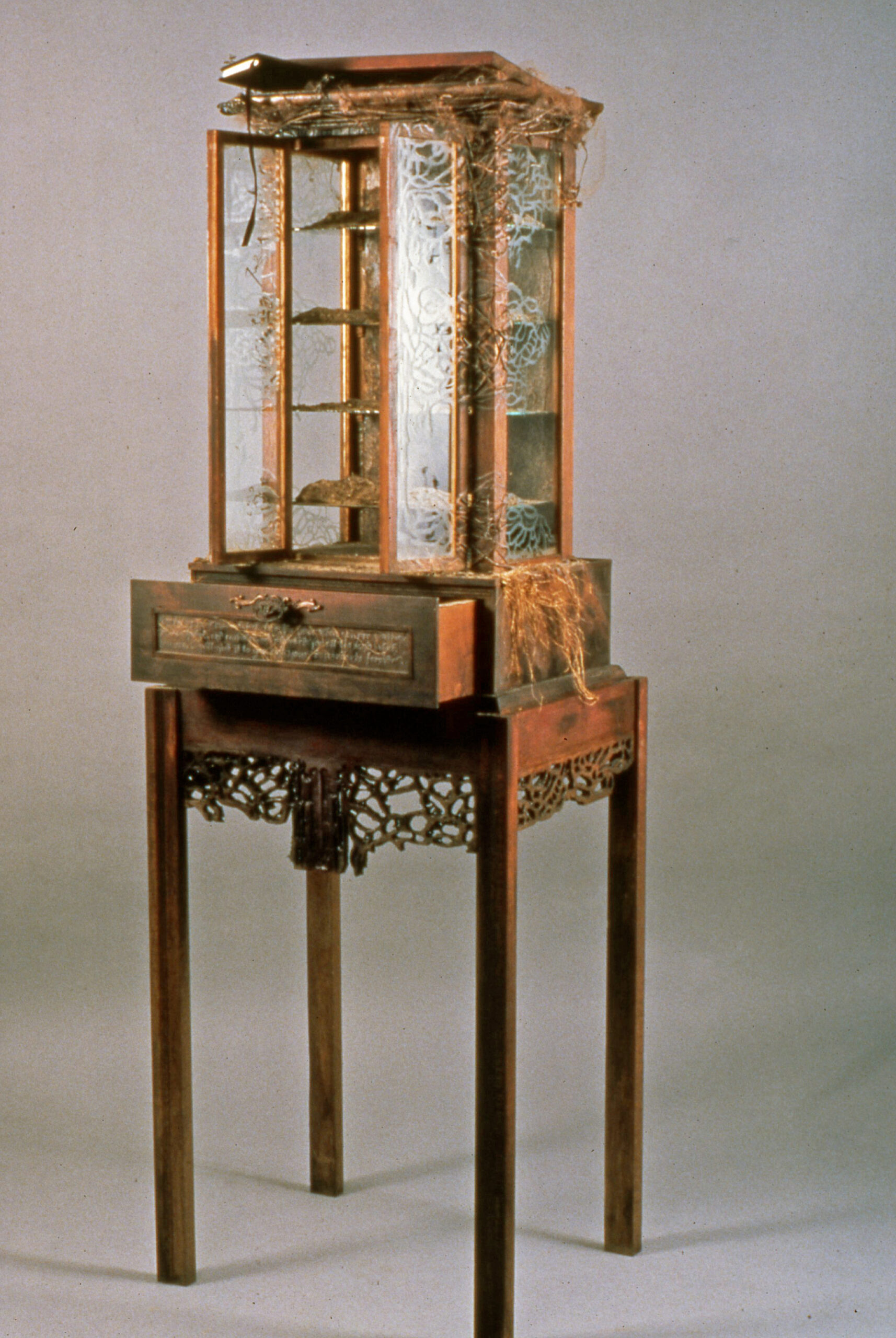
The Slew Series, begun in 1981, was the first sequential, content-based sculptural series that I undertook. Although I had created three-dimensional works during the 1970s, those pieces were primarily explorations of materials and process rather than personal narratives. The Slew Series marked a turning point in my work, allowing autobiography, memory, and metaphor to become the central focus. The word slew has two origins for the title. It was a childhood nickname given to me by my uncle, and it also refers to opposite extremes in frequency. As I developed the thirteen-part Ede Series (Ede meaning “my generation”), I became increasingly comfortable with assemblage as my primary working method. It complemented my lifelong inclination to collect objects, build things, preserve the effects of age and time, and celebrate texture.
Working in assemblage also reunited me with the traditional hand skills and furniture-building techniques taught to me by my family. Within these sculptures, those traditions could co-exist with my academic training in painting, drawing, and sculpture. This freedom made possible deeply personal works such as Ede 8, which reflects a self-directed yet limited life, constrained by childhood fears. Four recurring areas of inquiry generate ideas throughout the Slew Series: retrieval and reconstitution of memory, self-concept and identity, the relationship of death, violence, loss, destruction, and defeat to life, and curiosity about the boundaries between sanity and insanity.
My working process for this series—and for nearly all of my work—begins with writing about the person or idea to be explored. I compare my memories with those of family members, produce drawings or models to clarify forms, collect materials until all necessary components have been found or made, and only then begin construction. The collecting phase often takes the longest and may continue for several years. The assembled objects are not memorabilia. Each element is selected for its emotional, metaphorical, or symbolic meaning and often draws upon familiar yet powerful objects such as hope chests, wedding dresses, flags, or household furnishings. I strive to unite form and content so completely that each becomes inseparable from the other, allowing the work’s emotional meaning to be immediately accessible. Most of the thirteen Ede sculptures became emotional journeys in themselves, with their meanings continuing to evolve during construction.
The series currently includes works dedicated to Willard, Marjorie (in progress), Ruby, Essie, Amanda, Mary, Louise, and William Derryman McCune. There are many more people whose stories deserve to be remembered, and I hope to honor as many of them as possible during my lifetime.
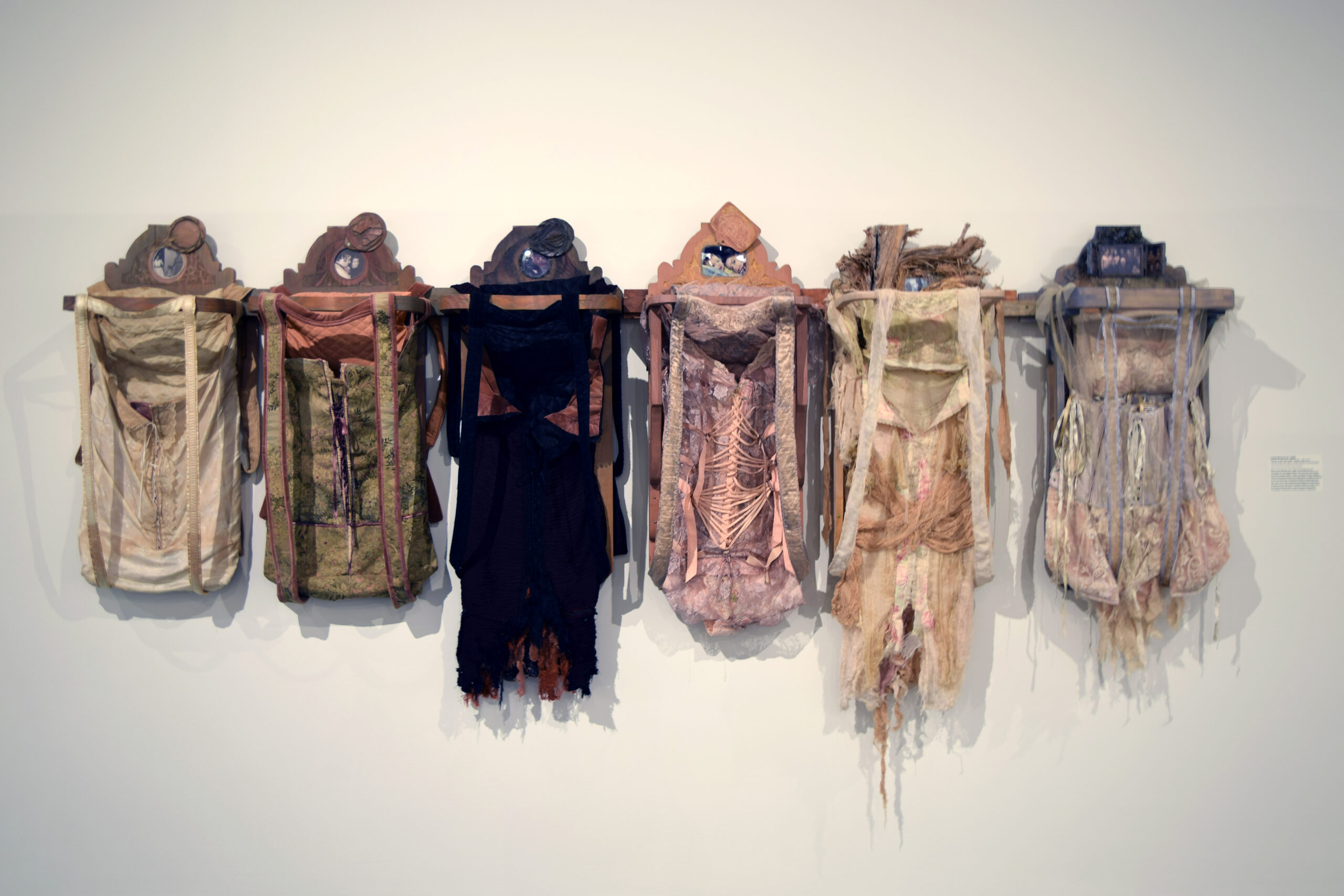
I conceived Ede 2 as a sculpture that would continue throughout my life. The first three sections were completed in 1982 when I was thirty-two years old. Unlike Ede 1, which was intentionally enclosed and hidden, Ede 2 was designed to remain open and visible. Each section represents a decade of my life and is arranged chronologically as a continuing timeline.
As a child, I often accompanied my mother into the fields, carried on her back. Family stories, photographs, and books documenting traditional methods of carrying children provided both memories and research for the work. At the same time, my growing grief over my inability to have children became an essential part of its meaning. The carrier boards were intentionally designed to feel heavy, recalling the burden of child-carrying boards used in many traditional cultures. Their forms also resemble the slender stone grave markers found throughout older Tennessee cemeteries, many of which contain porcelain photographs protected by small hinged doors. I adapted this imagery directly into the sculpture.
The first three compartments contain photographs of myself at ages twelve, twenty-two, and thirty-two, each paired with the individual who most shaped my understanding of motherhood and childbearing. The first honors my grandmother, Ruby Gauldin Harrison. The second contains a photograph from my wedding day with my husband, William Derryman McCune II. We were married for fifty-two years until his death in 2022. The seventh section of Ede 2 addresses the profound effects of his death on my daughters Nova, and Tayce, and me. The third compartment speaks to my miscarried children. This theme is also central to Ede 1, which metaphorically houses the five children who were never born and gives direct expression to that enduring grief.
The child carriers themselves take the form of corsets, complete with darts and boning. Historically, corsetry has signified the female body, yet these are intentionally left open at the front rather than tightly laced at the back. Instead of restricting the body, they allow immediate access to the child within, emphasizing care, protection, and nurturing. The first carrier is cream-colored, ornate, delicate, and ultimately too fragile to support a child. Each subsequent carrier incorporates fabrics, images, and found objects appropriate to a different stage of caregiving. Additional sections were added when I reached ages forty-two, fifty-two, sixty-two, and seventy-two, each reflecting my evolving understanding of motherhood. There may yet be additional sections at eighty-two or ninety-two, though that remains uncertain.
Like motherhood itself, Ede 2 is a work that remains perpetually in progress.